Showing posts with label photography. Show all posts

Monday, October 28, 2013

Photographs from Port of Spain, Trinidad and Tobago


 From the back seat of a taxi driving to Port of Spain, Trinidad.

 
Fisherman's boat waiting for the sun to go down and the tide to come in so that fishing can begin.

     Discarded coconuts. The sweet taste of coconut water is hard to refuse.

 
 A home near the Emperor Valley Zoo in Port of Spain, Trinidad.

 
Howler Monkey at the Emperor Valley Zoo.

All photographs were taken during a recent expedition to Trinidad by photographer Ben Wehlage.


Tuesday, October 22, 2013

Scottish Bagpiper at Rainwater Wedding


Scottish Bagpiper from the Rochester Caledonian Pipe Band.

Bagpiper preformed during the Rainwater wedding ceremony which took place in Lake City MN.

The official tartan of Rochester Caledonian Pipe Band is "MacDonald of the Isles Modern Hunting". 

Rochester Caledonian Pipe Band Tartan

Photograph taken by Ben Wehlage.

Reasons Why You Need a 50mm Lens


A video explaining why you ought to have a 50mm lens in your arsenal.

Sunday, October 20, 2013

Pathway in Hyde Park London England


Friday, October 18, 2013

Quick Tip: Halloween Photography From Our Friends at Canon USA

Quick Tip: Halloween Photography

October 01, 2013
The ideal jack-o’-lantern photograph... means a careful balance of trying not to overexpose the candles, or underexpose the outside of the pumpkin…


This article was originally published on April 15, 2011 and has been updated to include current product information.

Halloween is right around the corner, and what a great holiday for photographic inspiration: From cute kids in costumes to spooky haunted houses; eerie glowing jack-o’-lanterns to pastoral pumpkin patches – Halloween offers an endless variety of unique subjects.
Here are a few photographic tips to make the most of this Halloween:
Low-Light Photography
Much of what defines the spooky quality of Halloween tends to be in the dark, whether indoors or outdoors. Typically, this is where flash photography can come in handy. However, the bright light of a flash may not work here. In fact, this might be one holiday when it’s better NOT to use a flash in a dark scene.
There are several techniques you can use to take great shots in low light – without relying on a flash:


High ISO Settings
The higher your camera’s ISO, the greater its sensitivity to light. Maximum ISOs on current EOS cameras can be anywhere from ISO 6400 or above. In low light, try settings like ISO 1600, 3200, and higher.
Working with higher ISO levels does result in increased noise. Fortunately, modern digital SLRs offer very effective High ISO Noise Reduction technology. This can even be adjusted on most recent Canon EOS cameras, allowing different levels of noise control, including (on some cameras) a powerful Multi-Shot Noise Reduction option.
Wide Apertures
Wide apertures are identified by their lower f-stop values, for example: f/1.2, f/1.4, f/1.8, f/2.0, f/2.8. At these f-stops, more light is entering the lens through its larger aperture opening. Try to shoot at the lowest f-stop your lens will allow and the image will be brighter, without resorting to flash use. Lenses like Canon’s extremely affordable EF 50mm f/1.8 lensare an excellent way to get started in available-light photography.
Be aware that wider apertures/lower f-stops also results in shallow depth of field within your images. That means your subject will be sharp, against a blurry background and foreground. Therefore, critical focus is more important at lower f-stops. Unfortunately, that can be even more challenging in dim lighting – so double check your image focus by zooming in on the camera’s LCD after each shot, or whenever possible. 
Slow Shutter Speeds
Shutter speed is measured in fractions of seconds, but can also be set to last several seconds, minutes, or even hours. Slower, or longer, shutter speeds let more light into the camera – resulting in a brighter image, with no flash.

However,  slow shutter speeds also result in potentially increased image blur – both from subject and photographer movement. While you can't necessarily control subject movement, there are ways to minimize blur from your own movement handling the camera. When shooting handheld, your slowest 'safe' (blur-free) shutter speed should match your lens focal length, literally: A 16mm wide-angle lens only needs about 1/15th sec.; a 50mm lens needs about 1/60th sec.; a 200mm telephoto needs a much faster speed of 1/200th sec.; and an 800mm super telephoto lens requires at least 1/800th sec. shutter speed. If you follow that general pattern, your images should not have blur from photographer movement.

You also have Canon's Optical Image Stabilization on your side -- assuming you have an Image Stabilized (IS) lens. These lenses are very forgiving; each IS lens gives you up to four full stops of stabilization. With IS turned on, you can shoot with that 200mm telephoto at 1/60th or even 1/30th sec. shutter speed with little or no blur caused by photographer movement.

Another way to minimize blur with long exposures is to shoot with a tripod. This will eliminate blur caused by photographer movement with any lens, at any shutter speed (however, moving subjects may still be blurry). If you don’t have a tripod, fake it: Set your camera on a stable surface, or prop it on something while shooting such as a fence post, mailbox, table, or whatever is handy, flat, stable, and the right height for what you need.
Setting the Mood
Embrace the mood of your Halloween scene, whether it’s dark and spooky, or cute and playful:
Pumpkin patches are a perfect place for a family portrait. It’s a great way to use background details to create a sense of time and place that will give your photos context.
Look for the details – in costumes, decorations, bags of candy, etc – that help capture the spirit of the Halloween season.
Try B&W, sepia, or other types of tinted photography for a unique look. This may be adjusted in-camera through the EOS Picture Style settings, or you can create the effect while editing your images in Digital Photo Professional (or your preferred image editing software).
Experiment with lighting. For example: Use red ‘party’ bulbs for unique room lighting; or try lighting your costumed friends and family with flashlights (the under-the-chin flashlight angle works especially well for a scary portrait effect!)
Time Lapse movie mode is another cool one to consider. It shoots video at much lower frames-per-second rates and resulting videos show the passage of time much faster. Some compact Canon PowerShot digital cameras offer this built-in. If you have this feature, set the camera on a tripod and try to capture some fun time lapse videos: A child changing into their full costume; carving pumpkins; an evening’s worth of trick-or-treaters grabbing candy from a bowl; or whatever other activities you can think of.
Photographing Jack-o'-Lanterns
Jack-o’-lanterns are a challenging, but very rewarding subject to photograph on Halloween. There are just a few tricks to getting that perfectly eerie glowing pumpkin shot:
Turn Your Flash Off
Direct flash will completely overwhelm your jack-o’-lantern. Turn it off, and use the low light shooting described techniques above. If you have a tripod handy, the long exposure/slow shutter speed will work very well – mainly, because there is no chance of subject movement causing image blur (unless your pumpkin rolls off the table!).

If you absolutely need additional light from a flash, dial the Flash Exposure down a stop or two. This is possible on most Canon Speedlites; you can also adjust Flash Exposure for EOS and PowerShot built-in flashes, using the Flash +/- settings in camera. After reducing the flash output, if you’re using an accessory Speedlite with bounce capability, try bouncing your flash by redirecting the flash head to a wall or ceiling.  Or, if you can’t swivel the flash head (such as with a built-in flash), then consider diffusing it with a small sheet of wax paper or a scrap of thin white fabric.
Bouncing, or diffusing the flash will soften and reduce its light output, adding to the exposure without overwhelming the scene. You may have to experiment with different bounce angles, diffusion materials, and exposure levels before finding just the right combination.
Expose for the Candles
The ideal jack-o’-lantern photograph shows the inner glow of the candles, as well as the carved pumpkin face – which means a careful balance of trying not to overexpose the candles, or underexpose the outside of the pumpkin so much that you lose all detail.

Start with the candles: Put multiple candles in the pumpkin cavity to add as much ‘glow’ as possible. Use the spot, or partial spot, exposure metering option in your camera (indicated by a single dot, or circle, in the center of the Exposure Meter Icon), aimed directly on the glowing candles – this will help prevent them from overexposing. You can lock in this exposure reading by pressing the AE Lock button (the asterisk icon on back of your camera) or switch to Manual exposure (M) mode, dial-in the speed and aperture that indicate proper exposure from the Spot reading and leave exposure set there.
For the rest of the scene, try lighting the outside of the pumpkin with a warm, soft light source that will match the feel of the candles. A low-wattage lamp with a shade; a heavily diffused flash (try putting a piece of red, orange, or yellow colored gel/cellophane in front of the flash for added warmth); a string of Christmas lights; or even other candles – these are all great ways to add just enough light so you will see detail on the outside of your pumpkin without over-powering the glow of the candles within.
Try Bracketing
If possible, try bracketing your exposure. All EOS cameras allow taking three bracketed exposures (many high-end EOS models, such as the full-frame EOS 6D and EOS 5D Mark III, allow setting up to seven bracketed shots). Most of our digital SLRs allow a 3-shot bracket, with up to two stops of exposure adjustment (the EOS-1D/Ds line allows up to 7 shots with +/- 3 EV). Start by over- and under-exposing 1 full stop, and experiment from there. Between all of the bracketed shots, you’re sure to get one that has just the right balance of highlight and shadow.
Summary
As you see, the tips for great Halloween photographs are pretty simple. Really, it all comes down to two key elements: Variety and specificity.
In other words, there are a lot of different activities and subjects to capture in this holiday that is at once playful, cute, scary, spooky, comforting, and odd. However, because each subject may have a different mood, you will get the best results with a specific goal in mind as to the look/feel of each new image.
Challenge yourself to set a mood – whether through lighting, use of colors,or framing and composition. Halloween is a great holiday for experimenting, so shoot it all, and look for as many unique points-of-viewas possible!
The CDLC contributors are compensated spokespersons and actual users of the Canon products that they promote.
All images are copyright Scott Alexander, Damian Donach, Andrew Pfaff, Erika Silverstein, Chuck Westfall

Thursday, October 3, 2013

25 Totally Odd & Awesome Vintage Halloween Photos

Tuesday, September 24, 2013

Kilts Lake Pepin and the Rainwater Wedding


Rainwater wedding on the shores of Lake Pepin MN.  James and family dressed in traditional Scottish clothing.

For wedding rates please contact me at 507.358.9499.

Tuesday, August 27, 2013

How hard is it to photograph a wedding?


By Megan Lane 
BBC News Magazine
A couple have successfully sued their wedding photographer for his shoddy coverage of their big day. Anyone can point a camera at a happy couple, but what pitfalls do the professionals face?
The memorable shots from Marc and Sylvia Day's wedding are unusual, to say the least. Decapitated guests, a ceremony hardly visible through the gloom, and random close-ups of... not the bouquet, or a snatched kiss, but of carriage wheels.
The three-year-old bridesmaid - caught in one snap without her clothes on - could have done a better job.
The Days are so upset that they've taken their photographer to court for breach of contract over the £1,450 photo and video package.
But how hard can it be to get great shots at a happy occasion, where everyone is dressed up in picturesque locations? Most guests bring along their own cameras, after all.
Harder than it looks, says Paul Cudmore, a past winner of Wedding Photographer of the Year, who has been in the business for 18 years.
"It's all about emotions and capturing emotions. And obviously you've got to look out for vans driving past in the background."
The secret is in the planning - knowing what the bride and bridegroom want, who will be there, where the best locations are.
Then there are the timings.
"Brides are always late arriving, so you have perhaps four or five minutes to get shots you'd normally spend an hour on.
 A guest told me that at the last wedding she went to, the photographers were blowing whistles at them 
Paul Cudmore
"And brides and grooms - most of whom haven't been married before - don't realise that it can take quarter of an hour for people to leave the church and assemble for photos. I've had reception venues phoning me to ask where everyone is."
Most tricky of all is the group shot most couples want, if not for themselves, then for Mum and Dad, Auntie Mabel, and their grandparents.
To get that many people to stand in the right place, to look in the right direction - and to smile at the right time - can be like herding cats.
"It's all about communication, making the guests and the wedding party feel relaxed and happy," says Mr Cudmore. "At one wedding, a guest told me that at the last wedding she went to, the photographers were blowing whistles at them."
Neil Theyer photo
One of Neil Thayer's wedding shots
Neil Thayer, a wedding photographer based in Bath, says it's the photographer's job to keep everyone happy.
"It's like getting all your family together at Christmas - some people don't get on, there are husbands and wives who have split up and come together for this big set-piece. There can be a lot of tension. On one job I was on, there was very nearly a fight."
And even if fisticuffs aren't on the horizon, many of those being photographed simply want to crack on with the celebrating. They complain that the photos are taking too long, and itch to get off to the bar.
How does Mr Thayer keep things moving along, and still get the right shots? "I never stop talking to people, even if it's making silly jokes. I always make sure I work with the ushers, and know their names - because they will know the names of the people I don't."
Camera trouble
Then there are the naturalistic reportage shots popular with couples today. The only trouble is, people often freeze when they sense a camera lens pointing in their direction.
"They stop, crack a smile, then say 'Are you finished?' I say yes, they breathe a sigh of relief, relax, and start talking and laughing again. I keep shooting," says Mr Thayer.
A professionally-taken photo of a wedding cake with two grooms
There's more to it than fancy kit
"The bride and groom are not often together," says Mr Cudmore. "She'll be on one side of the room talking to someone, and he on the other. You have to instruct them to stand next to each other - not fake reportage, but staged reportage."
Both live in fear of mechanical failure, whether it's a camera card corrupting (which happened once to Mr Cudmore) or car trouble (Mr Thayer locked his keys in the boot and almost missed the reception).
"I always take two cameras and three or four lenses," says Mr Thayer.
"You've got to have back-up kit - I always take double. And I always pack a needlework kit in my bag in case of accidents," adds Mr Cudmore, who often finds himself helping to tie cravats and advising relatives on which side of the church to sit.
And if there are small children involved?
"So many people tell them 'you've got to be good, you've got to smile'. Then these little four and five-year-olds build up this big worry. I tell them 'we're going to have lots of fun, the bride will look like a princess and you'll be helping her'."
His advice for choosing a photographer for the big day? "Look at their portfolio and make sure it is all their own work."

Below is a selection of your comments.
I've only started in this industry and shot my first wedding recently. It's an incredibly daunting task. The timing, the constant awareness needed to capture moments, the technical difficulties in low light, people herding, research, and the time consuming post-processing all make this a lot more difficult than imagined. People just dive in, thinking a £500 camera with a built-in flash will cut the mustard. Not a chance. I've spent over 4k on gear, and need more lenses and light tools, six months of deep research and practice, 12 years using Photoshop professionally as a graphic artist. I'm still nervous about every shoot.
Emmett McLaughlin, Liverpool
I was married just outside of Gloucester 13 months ago today and I still get upset thinking about our wedding photos. We scoured the region for a photographer and had several discussions with him about the shots and style we wanted. Although I remember being nervous on the day how shots would come out, it wasn't until a week later that we received the final images and were absolutely devastated. None of us alone after the wedding, or full-length shots of my dress, or with my bridesmaid or family. Family shots like "where's Wally". We wrote to him afterwards to ask about some make-up shots and let him know our disappointment but received no reply. It all sounds so trivial, but it nevertheless hurts when there's no picture taken you can bear to have on display of your wedding day.
Jessica Oldroyd, London, England
As a professional photographer I can categorically state that wedding photography is a very special skill, a skill which I do not have. There is no second chance, no room for any error and no room for a small mistake. The ONLY way to learn wedding photography is to work as an assistant to a wedding photographer - not an easy job to get, either, as you are a potential threat to their business.
Chris Young, Caheragh, West Cork, Ireland
I'm one of the new breed of photographers I'm afraid. I've had some tutoring and attended classes in lots of photography disciplines, but none of it can really prepare you for what you will face on a real shoot. I've been fortunate that I've been chosen by friends to shoot weddings for cost of printing only or for free, and they have been happy with my work, but it's clear the real professionals earn every penny. It's exhausting, stressful work. You only get one chance at taking these photos, and the pressure and responsibility doesn't really hit you until the big day. Best left to the pros.
Roy Stoliday, Southampton
We also have terrible wedding pictures. The only one we have framed was taken by my father and we never look at our album as the photographer's pictures are dreadful. We plan to renew our vows after 10 years (four years time) and have some decent pictures taken by a talented photographer, and as a bonus our children will be there too.
Corrine, Sleaford
We didn't have a photographer at our wedding - we couldn't face spending hundreds of pounds to have a stranger boss everyone about for hours while we all got tired and bored. Our friends and family took lovely shots, we have a beautiful album, and everyone looks so happy and relaxed because they are being photographed by people they know.
Sarah S, York, UK
We had a fabulous photographer for our wedding, not stupidly expensive and he really captured the mood of the day. It was only after we booked him we realised he had won Wedding Photographer of the Year. Friends of our paid twice as much for theirs, who managed to get a fire extinguisher in every photo of the bride before the ceremony and tourists' heads looking over the castle walls.
Sarah, Sutton Coldfield
I got married in pre-digital times, 14 years ago. The photographer took three rolls of film, but when they were developed, the machine broke and two of the films, including the one with the church pix, got completely over-developed. While we only have happy memories of the main part of the ceremony, the lab made some manual black and white prints of as many church pictures they could, including some close-ups of bride and groom. They look absolutely stunning and everyone thinks it was done this way on purpose. I was very impressed by the skill and dedication of everyone involved to save as many pictures of our special day as possible.
Chris, London
I worked as a wedding host at a country house hotel and saw all kinds of photographers come and go. The digital era appears to have promoted a scatter gun effect in which the man behind the lens takes thousands of shots and hopes to get a good one. The best we worked with - and the ones who had the best rapport with guests - were the old school ones. We would support them and herd guests into the right places at the right times, but high cost doesn't mean high quality. Our recommended photographer was about mid-price and did Hasselblad work for the main photos and his daughter caught people in unguarded moments with a digital camera. A great pairing with an old school camera and new fangled digital one.
Gavin, Manchester, England
Many people are not using professionals because they think that the images shot by their guests will suffice and see it as a way of cutting costs. But a good wedding photographer can make the day run so much more smoothly. As well as taking pictures, the photographer is the one person prior to the reception who can organise and stage-manage the event ensuring that everyone is in the right place and guiding things along. It is an immensely stressful job with a huge amount of responsibility and certainly not for the faint-hearted. Yes, pros can be expensive but it's a three day job when all of the pre-organisation, editing, and post production is taken into consideration and so costs need to be covered.
Andy Newbold, Leatherhead, Surrey
We just asked guests to share their pictures with us. We ended up with the most fabulous photos and one guest even put an album together which was very special. My advice is not to pay out - the pictures we ended up with are exceptional quality, very natural and really catch the essence of the day.
Daphne, Northants, Daventry
As we were living abroad before our wedding, my parents arranged everything for us, so when we got back the photographer was already booked. At our first meeting she said she'd driven by the church (chosen because I'd know the minister my whole life, not for its appearance) and on a scale of 1-10 it rated about 3 for attractiveness, turning her nose up. I asked if she'd walked around to the little churchyard - of course she hadn't, should have fired her right then. She decided we would do most of the photos at the reception in a concrete courtyard, with the wrong lighting, shadows, a bench poking into half the photos, people squinting. She upset half the guests, bossing them about & as she only had a hand-held camera, they thought she was another guest. The photos are very average, but my friends took much better (=relaxed) ones. The technique and equipment is only half of it - the bedside manner counts for a lot. This was pre-digital - these days your guests can do it all, just have a list & maybe one friend to make sure which group shots you don't want to miss.
Jane, York
I was told by the person who taught me the science behind the camera, about wedding photography: "The ceremony lasts an hour, the cake may last three days, the bride won't fit in to her dress in five years, but... your photographs will have to last a lifetime." That mantra has stuck with me and in a business where the end product is still very disposable, it is one reason why I very rarely take any wedding photographs; because when pressing the shutter release, the image not only has to look good tomorrow, it still has to be appreciated 10, 20 or 30 years down the line.
Sean, Chesterfield, Derbyshire/Barcelona, Spain
At our wedding, our photographers (she had a team working with her) were brilliant. Never in your face and capturing emotion and moments and lighting... the pictures are as much art pieces as they are printed memories. Eight years later and we still keep in touch with her. We've been to several of her exhibitions and have one of her photos (not of our wedding) hanging in our hallway. Bottom line - it's not the equipment or luck, though those help. It's the eye of the artist holding the camera.
John F, Philadelphia
Over the past 10 years I shot countless weddings. I came to hate wedding photography as it is repetitive and very ungrateful. I admire those who are willing to cope with weddings. Stopped the whole wedding business about a year ago and switched entirely to studio work. And I love my photography again.
Charles, Belfast, UK
We didn't have a massive budget for our photographs, and found the extortionate prices some photographers were charging truly jaw-dropping. Our photos were OK, but I really believe that I could have done as good a job. Had I not been the groom, I would have done them myself.
Shane, Sale
That takes me back. Our photographer was brilliant, kept chatting, got all the shots we wanted and was a reasonable price. Not the 1000s quoted above. You need a good photographer. It is an art. I know someone who had a friend of a friend to do their wedding photos and they were just snapshots. Nothing outstanding for the mantlepiece.
Ian, Romford, UK
It takes more than just a good camera and a flash. It's all about reading a situation, learning how to use light and understanding group psychology. Not to mention weddings always put you in impossible situations... situations where the biggest names in photography would say "no way...you can't do that". So if you don't think you can work your way out of any situation, don't even think of ruining someone's wedding. Every day I see wonderful photographers on Flickr. Amazing work from amazing people. Thing is about 90% of them should never go near a wedding. Photographing things and photographing people are two very different things.
Robert Burress, Liss, Hampshire, UK
I got remarried last November in a Gothic style of wedding, which was new to the photographer. Although the finished album turned out fantastically, the photographs on the day were a real chore. After the wedding itself, it took about an hour for all the pictures to be done in every configuration imaginable... and 20 minutes after the guests had left for the reception. It started to feel as though the day was more about him and his pictures than about me and my husband.
Heather, Willenhall
This is a sad reflection on today's industry where anyone with a camera can now call themselves a photographer. As a professional and full-time photographer for 27 years, I have seen the standards within this industry eroded because of amateurs and weekend photographers who posses very little in the way of technical training or knowledge, vocational qualifications, no professional affiliations, no insurance, and no ability. I hope this is a valuable lesson and wake-up call for non-professional photographers that sub-standard work is not acceptable, and that they should get trained and get affiliated with a photographic organisation.
Ian Arthur, Glasgow
Some friends of mine chose their wedding venue (civil) simply because of the picturesque location it offered for photographs. The bride had a list of specific shots she wanted. Everything had been prepared for; they even allowed two hours for the full range of photographs in this spectacular garden with stunning wide-reaching vistas. On the morning of the wedding, I flung open my curtains with eager anticipation of a perfect day only to see...
...nothing. Not even the tree 30 feet away from my bedroom window. The DENSEST fog in many years had descended. It could have been a disaster but their photographer was a genius. She took close-ups of everyone, little vignettes of buttonholes or bridesmaids' beaded pumps or family groups inside the venue, then returned on the next decent day and took the vistas the couple had been so enchanted by. When the prints were placed in the album, the entire effect was eye-moistening.
Jaye, Rutland, England
I've been photographing weddings for over 10 years now and the industry has changed substantially. There are many photographers out there using sub-standard amateur equipment. The problem with underexposed photos in the church above is caused by the use of cheap lenses on a cheap camera body - 99% of churches do not allow flash photography so you need wide aperture lenses to cope with the low light conditions. The problem is that many people believe wedding photography is a less professional art than perhaps fashion or editorial. It is in fact probably the most demanding area of photography there is. You only have one chance, the lighting conditions are constantly changing and you have to keep people happy at the same time. I did a photography degree but only experience can teach you the pitfalls of this industry.
Ian, Sevenoaks
We just didn't have the money to spend over £1,200 on photographs, so we bought loads of disposables and got people to send us pictures they had taken on their own cameras. The quality of these was brill. Your mates know how to take your best picture.
Caroline, Winchester
I've stopped agreeing to be "official" photographer at friends and family weddings. It is simply the most stressful role to play and the results can be hit and miss. My tip: get a nice long telephoto lens and be inconspicuous and take candid photos after you've done all the staged cheesy stuff. It also helps to know your location beforehand. Give me landscapes and nature over excited, tipsy wedding revellers any day of the week.
Adam, Manchester
I used to provide tech support to a number of clients including a wedding photographer. Every time he wandered in with his latest video editing disaster I cried a little on the inside for the poor victims. It wasn't my place to tell him he was destroying dreams but I think anyone looking for a photographer should ask to see some kind of portfolio. There really are some muppets out there who see an easy few hundred quid in the making.
Bob, Derby

Monday, August 19, 2013

5 Reasons Why (Good) Photographers Are Expensive

I have been turned down by clients more often than I like due to the cost of my services. In turn, they go to someone very inexpensive or to a chain store. Unless they are familiar with the world of professional photography, they most likely have no idea what goes into producing a finished product. Below I’ve listed some reasons why a quality photographer costs more and why you get what you pay for (usually).
5. We, too, are running a business
Just like any other establishment you buy products from, a professional photographer is also a business and according to the IRS, everything we do is a “product that can be taxed”. This means we have to have a business plan, figure out how much money we have to make to cover our business expenses, pay ourselves a salary, and pay taxes. Our time, creativity, knowledge, expertise, personal attention, and unique individual styles are mostly what you are paying for and if we are good at our craft, then we are well worth the money. (Kind of like installing kitchen cabinets made of particle board……or walnut).
4. The time we put into your photos is very valuable
When you are charged for any type of photo shoot, whether it’s an 8-hour wedding, commercial product shots, a corporate event, or family photos, you are not only paying for the number of hours we are with you taking the photos. You are also paying for the post-production which is extensive and (should be) very detailed. We come home, upload enormous files onto our computers, external hard drives, CD/DVDs, or an Internet storage space (i.e. we back it up so that we will never lose your photos). Depending on the amount of adjustments made to a photo (color correction, skin retouching, cropping, resizing for different purposes, etc.), the post-production work can be 40 hours or more. This includes travel time, conversations with you, ordering prints, and more. Our work is not even close to finished when we leave you after your session.
3. The time we put into learning our craft is even more valuable
Everyone is a “photographer” these days. With good quality digital cameras available to all consumers, anyone can take photos with more clarity, better color, and a longer lens. THIS DOES NOT MAKE EVERYONE A PHOTOGRAPHER!!!! A professional that knows exactly what they are doing has spent many years learning, practicing, attending classes and workshops, and will continue to do so throughout their career. We know how to frame a photo, how to tell the camera to do exactly what we want it to, how to expose the image so that it comes out just right. We also know exactly how to make lighting do what we want, when we want. I’m not even going to go into detail about learning Photoshop. It takes an equally long amount of time to become knowledgeable and good at using the program. The extent of our expertise greatly surpasses that of someone that knows how to point the camera at something and push the button. And on that note: A GOOD CAMERA DOES NOT MAKE A GOOD PHOTOGRAPHER!!
2. The cost of full digital files, prints, and why we want you to order them from us
Back in the days before digital cameras when everyone had to shoot with film, the negatives were the “digital files”. A photographer owns their work and would never, ever hand over their negatives (their original copy of their work) to someone without it costing an exorbitant amount of money. Just because digital files can be replicated doesn’t make this any different now. You are still paying for your photographer’s craft and the photographer always has the ultimate say about what you may do with their art. Musicians get royalties every time their song is used. A painter sells their hand-painted, original artwork for a ton of money and photographer is no different. What you are paying for are the rights to their work and it’s worth a lot of money.
As for buying prints…
Again, professional photographers own their work, but in this aspect I mean we claim it, it is ours, and we are proud of it. We want it showcased in the best possible light and that means having it printed on the best possible material, with the best ink, using the best printers. When we use a professional lab to order prints, not only do we care about the finished product but the lab does, too, because this is also representative of their work. Walmart, CVS, and other cheap photo printers do not care. They are corporate, therefore the bottom line is money, not quality. They make this money from volume, not by producing a high quality product. If you are going to pay for a high quality photographer, why would you diminish the quality of the photos by ordering cheap prints? (Kind of like having a perfectly cooked New York Strip steak…..and smothering it with grape jelly).
1. You get what you pay for: Professional vs. Hobbyist vs. Chain Store
This may be the most important reason to pay more for a photographer. It may not always be the case, but as with most products it is true. A professional is there completely FOR YOU. You are going to get the most specialized and customized personal attention that is designed to give you spectacular photographs exactly how you want them (or better!). A hobbyist has not put everything they have into knowing how to do this and a chain store, literally, does not care. A professional knows how to create beautiful imagery, usually in specific areas of photography. A hobbyist likes to take pictures. A chain store, literally, doesn’t care. Did I mention that chain stores do not care about your pictures? They recruit their camera people by saying “No experience necessary, will train!” They train them how to push the shutter button on the camera and make money off of volume and what they push you to buy after your shoot. You might as well set the timer feature on your nice digital camera, stick it on a tripod, gather everyone next to a window and not pay for it at all. Professional photographers live and breathe photography. We will be able look at those chain store photos and point out to you, in great detail, exactly why they are horrible photographs. A professional won’t even let you have the photo if they think that it’s mediocre. We will break our backs making your photos perfect and give you a fantastic product….AND YOU GET WHAT YOU PAY FOR!
———————————————————————————————————-
-written by Melaney Wolf, photographer and founder of Melaney Wolf Photography

Tuesday, July 30, 2013

Dreamlike And Quirky Illustrations Drawn On Photographs

By Thia Shi Min, 30 Jul 2013 


Swedish illustrator Johan Thörnqvist doodles on photographs that he has taken with his phone, creating surreal illustrations with them.

By overlapping one medium over another, Thörnqvist creates a universe for his miniature characters to play in.

View more of these illustrations below.


[via Johan Thörnqvist]

Thursday, July 11, 2013

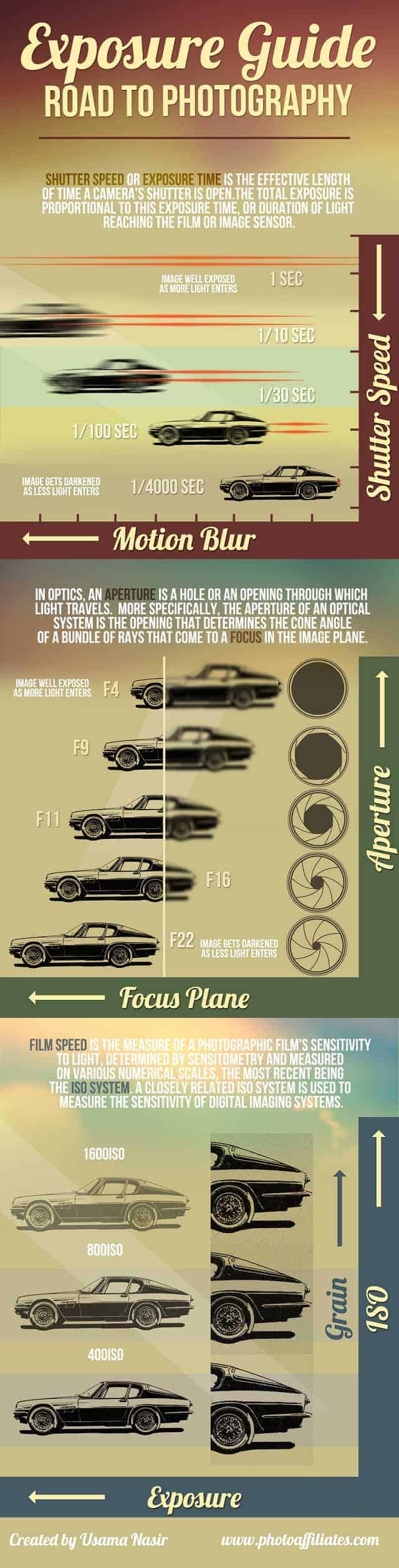
Exposure Guide: Road to Photography [Infographic]

Exposure Guide: Road to Photography [Infographic]

JULY 10, 2013 |  BY   |  RECREATIONTECH  |  1 COMMENT AND 0 REACTIONS
As an amateur photographer, I found this infographic to be immensely enlightening as to how cameras work and the terminology that goes along with camera mechanics.
It seems that exposure is the usually the first lesson learned when it comes to understanding photography. The shutter speed or exposure time is the amount of time that the camera’s shutter is open letting light reach the film or image sensor on your camera. As the graph shows, the longer the shutter speed, the more likely you are to get motion blur in your photo.
The aperture of lense affects the image as well. The larger the opening, the more light will be exposed. So if you want a more ‘in focus’ picture in daylight, reduce the aperture size so that the image will become darkened as less light enters.
Finally, there is film speed. This is the measure of a photographic film’s sensitivity to light, determined by sensitometry and measured on various numerical scales. The ISO system is used to measure the sensitivity of digital imaging systems. Insensitive film requires more light exposure to produce a similar image density that you would get from more sensitive film. This is referred to as ‘slow film’. The other end of the spectrum, ‘fast films’ are highly sensitive. This reduction of exposure in higher sensitivities, in both digital and film photography, generally leads to reduced image quality. Thus, the higher sensitivity creates a ‘grainier’ image.
[via]

Paine's Furniture Store Tour


Paine's Furniture Store Tour with Bucky Beeman of RGI commercial real estate.

Bucky takes us on a visual tour of the former furniture store which is now up for sale or lease.


Video directed by Ben Wehlage.


Produced by Wehlage Pictures.


www.wehlage.com